
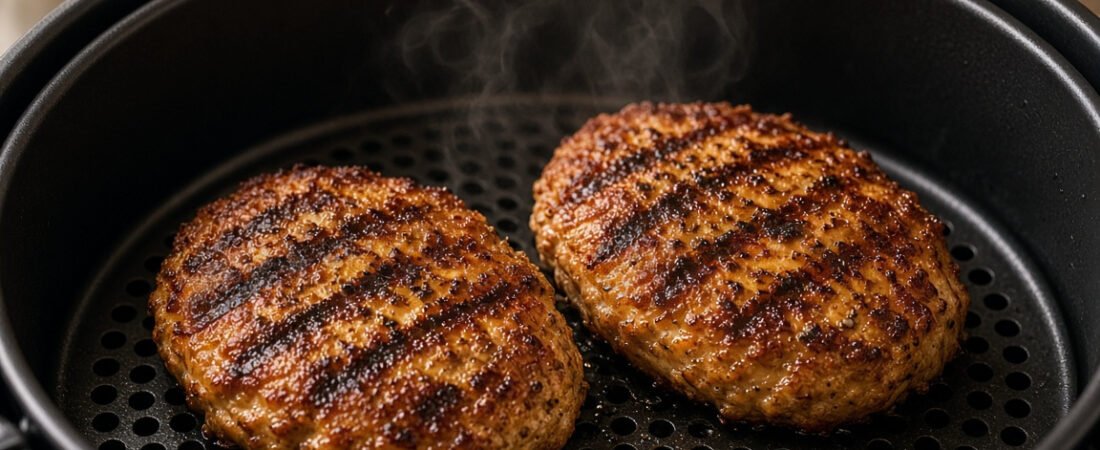
An air fryer gives you a juicy, golden-brown chicken burger in about 15–18 minutes — no oil mess, no guesswork. Set the temperature to 375–400°F (190–200°C), cook until the centre reaches 165°F (74°C), and you’re done.
This guide walks through everything — from choosing and seasoning your patties to hitting that perfect internal temperature, cooking from frozen, and the game-changing combination of sous vide plus a quick air fryer finish for seriously juicy results.
Key Takeaways
- Air fry fresh chicken patties at 375–400°F (190–200°C) for 15–18 minutes, flipping once halfway through.
- Frozen patties need 20–24 minutes at 375°F (190°C) — no thawing required.
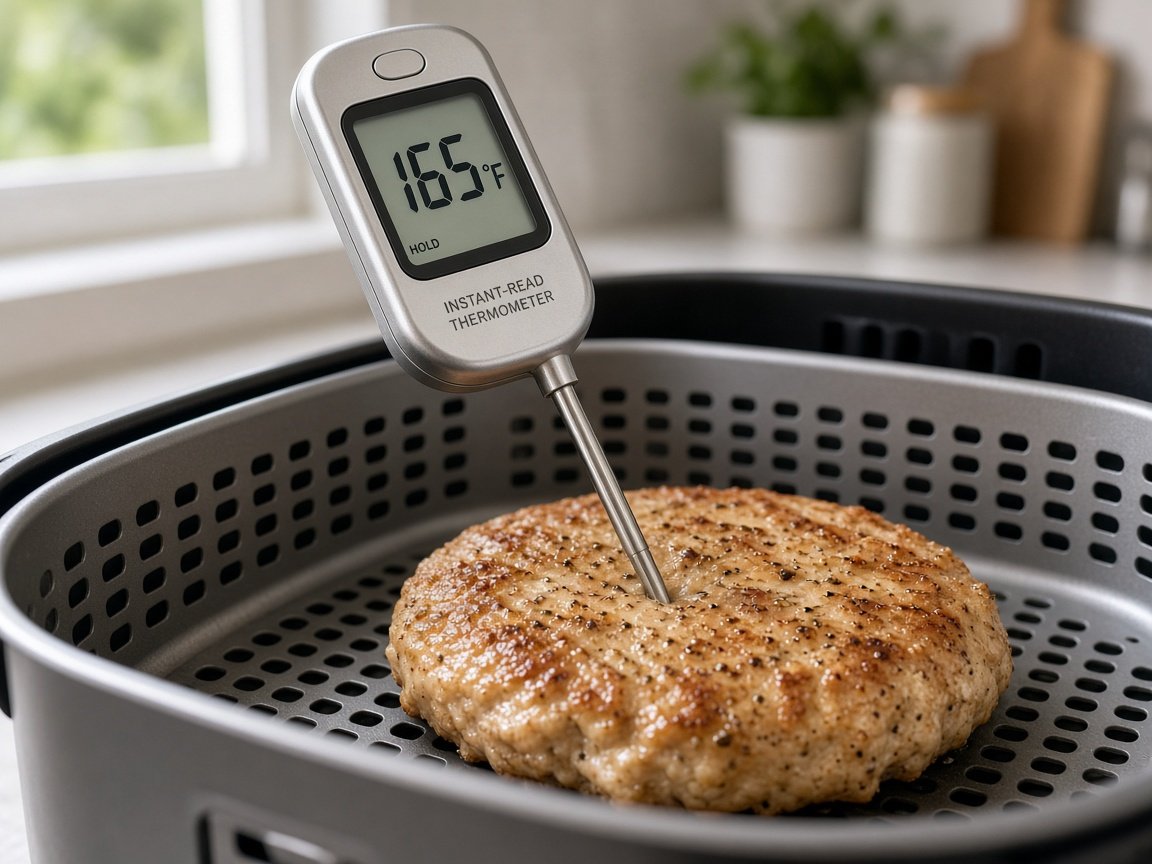
- The USDA’s minimum safe internal temperature for poultry is 165°F (74°C). An instant-read thermometer is the only reliable way to confirm this.
- A light brush of oil on the patty (not the basket) prevents drying and helps the surface brown properly.
- Combining sous vide with an air fryer finish produces the juiciest chicken burger you can make at home.
Why Does an Air Fryer Work So Well for Chicken Burgers?
Air fryers circulate very hot air at high speed around the food, mimicking the effect of deep frying — but without submerging anything in oil. For chicken burgers, that rapid hot airflow creates a crisped exterior while the inside stays moist, as long as you don’t overcook it.
Chicken breast patties are lean, which is their great advantage for a lighter burger and their one risk: without fat to protect them, they dry out quickly at high heat. The air fryer’s short cook time actually helps here. Because you’re hitting the target internal temperature fast, there’s less time for moisture to escape compared with longer oven baking at a lower temperature.
The other practical win is cleanup. The drip tray catches any juices, the basket is typically dishwasher-safe, and you’re not dealing with a greasy stovetop. If you’re making burgers for two or three people on a weeknight, the air fryer is one of the most efficient tools in the kitchen.
What Equipment Do You Need?
You don’t need specialist equipment, but a few items make a real difference to the finished result.
- An air fryer with a basket or tray — most standard models with a 3.5–5.8 litre capacity will comfortably fit two to four patties without overlapping.
- An instant-read meat thermometer — this is the single most important tool for cooking chicken safely. Colour and texture alone are not reliable indicators of doneness.
- A pastry brush or pump-style oil mister — for applying a thin coat of oil to the patty surface. Avoid aerosol cooking sprays; the propellants in many aerosol products can degrade non-stick basket coatings over time.
- Parchment liners designed for air fryers (optional) — these have holes to let air circulate, and they make cleanup even easier.
How Do You Prepare Fresh Chicken Burger Patties?
Whether you’re using shop-bought fresh patties or making your own from minced chicken, preparation is straightforward. If you’re making your own, minced chicken thigh (or a thigh-and-breast blend) gives a juicier result than pure breast mince, because thigh has a higher fat content that helps the patty stay moist under heat.
For seasoning, the basics — salt, black pepper, garlic powder, smoked paprika — go a long way. Mix the seasoning directly into the mince before forming patties, rather than sprinkling it on the surface, so the flavour distributes evenly throughout. For depth, a splash of Worcestershire sauce or a teaspoon of Dijon mustard mixed in works well too.
Shape patties to about 1–1.5 cm thick (roughly half an inch). Thicker patties cook unevenly in an air fryer: the outside can brown before the centre reaches temperature. Thinner patties cook through evenly and quickly. If you prefer a thicker burger, consider using the sous vide method first and finishing in the air fryer — that combination is covered below.
Once shaped, brush both sides with a neutral oil — sunflower, light olive, or avocado oil all work well. This thin layer of fat promotes browning through the Maillard reaction and prevents the surface from drying out in the circulating heat.
What Temperature and Time Should You Use?
For fresh chicken burger patties, 375°F (190°C) is the sweet spot for most air fryer models. It’s hot enough to brown the exterior properly but gentle enough to give you a couple of minutes of margin before the inside overcooks. If your model tends to run hot, start at the lower end of the range and check early.
| Patty type | Temperature | Cook time | Flip? |
|---|---|---|---|
| Fresh, 1–1.5 cm thick | 375–400°F / 190–200°C | 15–18 minutes | Yes, at 8 minutes |
| Frozen, standard thickness | 375°F / 190°C | 20–24 minutes | Yes, at 12 minutes |
| Sous vide–cooked, finishing only | 400°F / 200°C | 3–5 minutes | Once, or as needed |
These are guidelines — always confirm doneness with a thermometer, since air fryers vary between models and brands. The USDA specifies 165°F (74°C) as the minimum safe internal temperature for all poultry. That’s the number to trust, not colour or timing alone.
The USDA specifies 165°F (74°C) as the minimum safe internal temperature for all poultry, including ground chicken. This is the standard to meet before serving, regardless of cook time or appearance.
How Do You Cook Frozen Chicken Burgers in an Air Fryer?
Frozen chicken burgers are one of the air fryer’s strongest use cases. You can go straight from freezer to basket — no thawing required. The air fryer’s circulating heat defrosts and cooks simultaneously, and the result is often better than pan-frying from frozen, where the outside can char before the inside is safe to eat.
Cook frozen patties at 375°F (190°C) for 20–24 minutes, flipping at the halfway point. The extra time (compared to fresh) accounts for the energy needed to bring the core up from frozen. Brush or spray the top surface with a little oil after the first flip, once the patty has thawed enough to absorb it — this helps the exterior crisp up in the second half of cooking.
The thermometer rule applies here too. Frozen patties are deceptive: the outside can look golden and cooked well before the centre reaches 165°F (74°C). Give it the extra minute it needs and check with the probe — better to be sure with ground chicken.
Step-by-Step: Cooking a Chicken Burger in an Air Fryer
- Preheat your air fryer for 3 minutes at your target temperature. This ensures the basket is hot when the patty goes in, which starts the browning process immediately.
- Prepare your patties — if fresh, season well and brush both sides with oil. If frozen, place directly in the basket and brush the top after the first flip once the surface has thawed slightly.
- Load the basket — arrange patties in a single layer with space between them. Overlapping patties steam rather than fry and won’t brown properly.
- Start cooking — set the timer for half the total cook time (around 8 minutes for fresh, 12 for frozen).
- Flip — open the basket, flip each patty, and resume cooking for the remaining time.
- Check the temperature — with 2–3 minutes remaining, insert an instant-read thermometer into the thickest part of the patty. You’re looking for 165°F (74°C). If not there yet, continue in 1–2 minute increments.
- Rest briefly — let cooked patties rest for 2 minutes before building the burger. This allows juices to redistribute rather than running out when you bite in.
- Toast your buns (optional but worthwhile) — place bun halves cut-side down in the basket for 60–90 seconds while the patties rest. The air fryer toasts them quickly and evenly.
How Do You Keep Chicken Burgers Moist in an Air Fryer?
Moisture is the main challenge with air-fried chicken. The circulating hot air is excellent at removing surface moisture — which creates that crispy exterior — but it can take interior moisture with it if you’re not careful. Here’s what genuinely helps.
Use thigh mince, or a blend. Chicken thigh has significantly more fat than breast, and fat carries both moisture and flavour. If you’re making patties from scratch, a 50/50 thigh-to-breast ratio is a good starting point for a burger that stays juicy without feeling heavy.
Don’t skip the oil brush. Even a thin coat of oil on the patty surface creates a barrier that slows moisture loss in the first few minutes of cooking, giving the interior time to reach temperature before the surface dries out.
Don’t overcook. This is the number one cause of dry air-fried chicken. The difference between 165°F (74°C) and 180°F (82°C) is dramatic in a lean patty. Pull it at the minimum safe temperature and rest it.
Add a binding ingredient. When making your own patties, a tablespoon of breadcrumbs or a small amount of grated onion mixed into the mince helps retain moisture during cooking. Grated onion also releases steam from within the patty as it cooks, keeping the interior tender.
What Seasonings and Toppings Work Best?
Chicken is a mild base that takes seasoning well, which makes it one of the most versatile burger meats to work with. Here are flavour directions worth trying.
Classic: Salt, pepper, garlic powder, onion powder. Simple and reliable — it lets toppings do the talking and works with almost any sauce.
Smoky: Smoked paprika, ground cumin, a pinch of cayenne, salt. Pairs well with chipotle mayo, pickled jalapeños, and a sharp cheddar.
Herb-forward: Dried thyme, oregano, lemon zest, garlic, salt. Good with tzatziki, fresh tomato, cucumber, and a soft flatbread rather than a standard bun.
Asian-inspired: Soy sauce and ginger mixed into the mince, with a touch of sesame oil and white pepper. Top with pickled vegetables, sriracha mayo, and a steamed milk bun for something genuinely different.
For toppings, texture contrast is as important as flavour. A crispy air-fried patty benefits from something cool and creamy (slaw, avocado, mayo), something sharp (pickles, pickled red onion), and something fresh (lettuce, tomato). The bun itself matters too — brioche adds richness, potato rolls are pillowy and sweet, while a seeded wholemeal bun adds nuttiness and structure.
How Does Air Frying Compare to Other Cooking Methods?
It’s worth knowing where the air fryer sits relative to other methods, so you can choose the right tool for the moment and the result you’re after.
| Method | Result | Approx. time | Effort level |
|---|---|---|---|
| Air fryer | Crispy exterior, moist interior if not overcooked | 15–18 min | Low — set and check once |
| Pan or griddle | Excellent Maillard crust, good manual control | 12–15 min | Moderate — requires attention |
| Oven (baked) | Even cooking throughout, less surface browning | 20–25 min | Low — but preheat adds time |
| Grill or BBQ | Smoky char flavour, great presentation | 12–16 min | High — setup and monitoring |
| Sous vide + air fryer | Maximum juiciness, precise doneness, great crust | 45–75 min total | Moderate — mostly hands-off |
The air fryer wins on the weeknight convenience metric: minimal prep, minimal cleanup, consistent results with a low skill floor. The pan or griddle gives you more crust control if that’s a priority. The sous vide combination puts you in a different category altogether — that’s the method for when you want the absolute best result, not just a quick dinner.
Can You Combine Sous Vide and Air Frying for the Best Chicken Burger?
Yes — and if you’ve never tried it, it’s worth at least one experiment. The logic is straightforward. Sous vide cooks the chicken patty to a precise internal temperature throughout, so it’s perfectly cooked edge to edge, with no grey overcooked ring around the outside. The air fryer then provides what sous vide can’t: a hot, rapid burst of dry heat that crisps the surface.
The process works like this: sous vide your chicken patties at around 140–145°F (60–63°C) for 1–2 hours, depending on thickness. This pasteurises the chicken at a temperature lower than the standard 165°F threshold by holding it there long enough — a time-temperature relationship covered in USDA guidelines on poultry safety. Remove the patties from the bag, pat them thoroughly dry with kitchen paper (surface moisture is the enemy of browning), then air fry at 400°F (200°C) for 3–5 minutes per side, just long enough to build a golden crust without pushing the internal temperature much higher.
The result is a chicken burger that is juicy all the way through — genuinely, not just in the centre — with a properly browned exterior. It’s very hard to achieve with any single cooking method alone, and once you’ve tried it, the air-fryer-only approach starts to feel like a reasonable weeknight shortcut rather than the gold standard.
If you’re new to cooking chicken sous vide, the step-by-step sous vide chicken breast method on SousVideBee is a solid starting point — the same principles of temperature, timing, and water bath setup apply directly to burger patties made from breast mince or breast fillets.
Once you’re comfortable with the technique, you can experiment with slightly lower temperatures for an even more tender result. For a detailed look at dialling in that level of juiciness, the guide to getting perfectly juicy chicken breast every single time covers the key variables — temperature, timing, and what changes at each degree — in a way that translates directly to burger patties.
Frequently Asked Questions
Do I need to preheat the air fryer for chicken burgers?
It’s recommended but not strictly essential. A preheated basket means the patty starts searing immediately, which improves browning and reduces the chance of the exterior drying out during a longer warm-up phase within the cook cycle. Three minutes at your target temperature is usually enough.
Can I cook chicken burger patties from frozen without thawing?
Yes. The air fryer handles frozen patties well — go straight from freezer to basket. Cook at 375°F (190°C) for 20–24 minutes, flipping at the halfway point. Always verify the internal temperature has reached 165°F (74°C) before serving.
How do I stop chicken burgers from drying out in the air fryer?
Three things help most: brush the patty with a thin coat of oil before cooking, don’t exceed 165°F (74°C) internal temperature, and rest the patty for two minutes after cooking. Using thigh mince or a thigh-and-breast blend also helps, as the higher fat content resists drying under circulating heat.
What internal temperature should a chicken burger reach?
The USDA specifies 165°F (74°C) as the minimum safe internal temperature for all poultry, including ground chicken. This is the standard to meet before serving, regardless of cook time or how the patty looks on the outside.
Can I cook chicken burgers in an air fryer without oil?
You can, and the burger will still cook safely. Without oil, browning is reduced and the exterior has a higher chance of drying out. For shop-bought patties with higher fat content this matters less. For lean homemade patties, even a very light brush of oil makes a noticeable difference to the texture and colour of the finished burger.
How do I toast burger buns in an air fryer?
Place bun halves cut-side down in the basket after removing the cooked patties. Air fry at 350°F (175°C) for 60–90 seconds. The cut surface toasts quickly; check at 60 seconds to avoid over-browning.
Can I make chicken burgers ahead and reheat them in the air fryer?
Yes. Reheat at 350°F (175°C) for 4–6 minutes, flipping once. The air fryer is better for reheating than a microwave, which steams the patty and softens any crispy exterior you built during the original cook.
What’s the Best Way to Get Started?
If you’re cooking chicken burgers in an air fryer for the first time, keep it simple: fresh patties, well seasoned, brushed with oil, 375°F (190°C) for 15–18 minutes with a flip halfway. Get comfortable with that baseline before experimenting with temperatures, different flavour profiles, or the sous vide combination.
The thermometer is the best investment you can make if you don’t already own one. It removes the guesswork from cooking chicken, it makes you more confident with every method, and it’s the tool that will improve your cooking across the board — not just in the air fryer.
A simple three-step progression to build from:
- Tonight: Try the basic fresh patty method at 375°F (190°C) with your preferred seasoning blend. Focus on getting the thermometer reading right rather than the timing.
- This week: Experiment with a thigh-and-breast mince blend and try one of the seasoning variations above. Notice the difference in moisture level compared to pure breast mince.
- Next weekend: Try the sous vide plus air fryer combination. It takes more planning but the juiciness difference is dramatic — and it’s largely a hands-off process once the patties are in the water bath.
The combination of precise temperature control from sous vide and the rapid crust-building of the air fryer is becoming one of the most talked-about home cooking techniques heading into 2027 — as sous vide circulators become more affordable and air fryers more capable of delivering restaurant-quality results at home. If you haven’t explored sous vide cooking for chicken yet, it’s well worth adding to your toolkit alongside the air fryer, rather than treating them as alternatives.